

Arkite Alerts Archive
Welcome to the archive of Arkite Alerts, Global Forecaster's free newsletter notifying subscribers of the latest news, podcasts, interviews, Global Trader performance reviews and more.
Arkite: the name derived from my Arkent Strategy to navigate, survive and thrive through the great shift.
Wake Up, Western Democracies — Before It’s Too Late
China, Russia, America and the End of the Western Era
Dear Arkite,
Watch my latest interview on The Market Timing Report:
Andrew Pancholi — founder of The Market Timing Report and leading cycles analyst — sits down with renowned global forecaster David Murrin to dissect the tectonic shifts shaping our world.
Together, they explore the geopolitical and economic power struggle between China, America, and Russia, the Ukraine conflict and NATO’s response, and how these forces are driving the next great market cycle.
🔍 Key themes discussed:
- China’s long-term strategy and global ambitions
- Russia’s internal fractures and military overreach
- The U.S. response and Western decline
- NATO’s evolving role in global stability
- How cycles and geopolitics intersect to forecast market turning points
💡 Investor, policymaker, or global observer, this interview offers rare insight into the decade ahead — where markets, wars, and empires converge.
The Arkent Fund – A Strategic Haven for Intelligent Capital

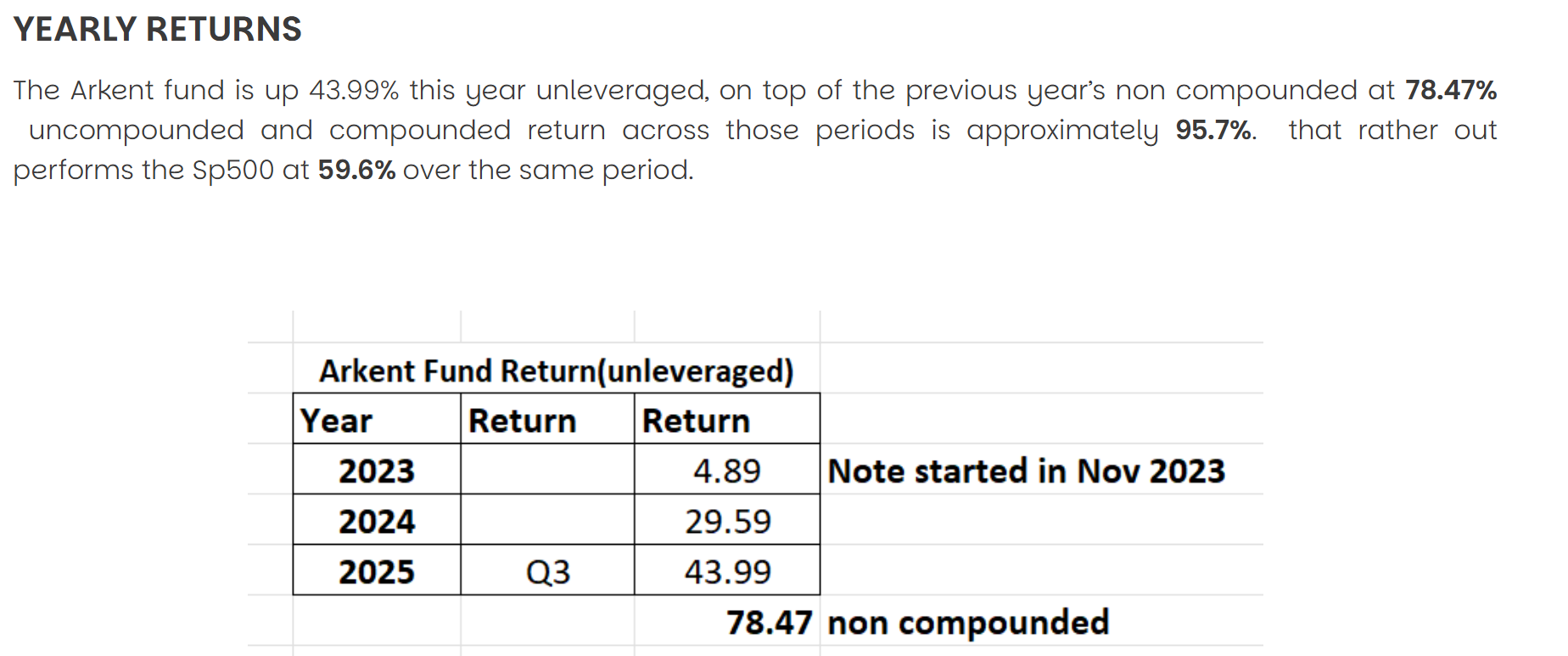
Three years ago, at the request of several of our high-net-worth clients seeking greater control over their assets—and wishing to move away from linear, herd-driven financial management—I created The Arkent Fund. Named after the Ark built to survive the great flood.
The fund was designed as an unleveraged, long-only vehicle focused on key strategic sectors, operating with minimal turnover yet positioned for maximum resilience and return. Its purpose was to preserve and grow wealth through what I anticipated would be a turbulent period in global financial markets.
Two years on, we are pleased to report remarkable performance, demonstrating the strength of our cyclical and strategic investment approach. Our clients, who receive regular market intelligence updates from Global Forecaster, continue to manage their Arkent portfolios independently with the benefit of our strategic guidance.
If you are a high-net-worth individual with investable assets exceeding £5 million and would like to subscribe or learn more about this approach, please Engage David
How the CCP is Planning Global Domination - David Murrin’s Shocking Insights
Dear Arkite,
Watch part 2 of my 🇬🇧 British Thought Leaders interview with Lee Hall of NTD:
Global strategist David Murrin joins NTD’s Lee Hall to reveal what he believes is the greatest threat to the world: the Chinese Communist Party’s ambition to dominate globally. From naval supremacy to espionage and advanced weaponry, Murrin exposes the CCP’s strategies to undermine Western democracy and freedom. Discover the tactics they’re using, the weapons Western militaries can’t counter, and urgent steps needed to avert a global crisis. Don’t miss this absolutely eye-opening discussion! Subscribe for more geopolitics insights. 🔔
Britain's Looming Crisis: David Murrin on Weak Military, Leadership & Impending Global Conflict
Dear Arkite,
Watch my interview with NTD's Lee Hall 🇬🇧 British Thought Leaders, Part 1:
Britain's Looming Crisis: David Murrin on Weak Military, Leadership & Impending Global Conflict 🚨 We dive deep into Britain’s political turmoil, the urgent need to bolster defence, the push for affordable energy, and the critical role of strong leadership.
Part 2 out on Friday!
New Podcast: UK Affairs
Dear Arkite,
Listen now to my latest podcast, The State Of It, where Horatio and I discuss current UK politics:
David argues that Labour’s credibility has been damaged by Angela Rayner’s resignation and Starmer’s handling of it, and that internal Left–Centre tensions are widening. He is scathing about David Lammy’s promotion and predicts Reform UK will overtake Labour well before 2029 due to a looming financial crisis and public disillusionment with both major parties.
He criticises Starmer’s leadership, the Chagos decision, and the choice of Mandelson, and says UK defence is dangerously under-resourced and over-reliant on US enablers. He argues for missile defence and a stronger nuclear triad. Finally, he predicts a UK-led Western debt crisis driven by commodity-led inflation and policy missteps by Rachel Reeves.
Potential Taiwan Invasion/blockade Amber Warning
In Red Peril 43; Chinese Preparation For T-Day Invasion we warned that any snap PLAN exercise around Taiwan could quickly become a real invasion with no warning.
Thus every exercise had to be treated as potential invasion. For those of you that follow our real time prediction strings you will be aware that those conditions have been met.
In addition post the PLAN miliray parade as outlined in Xi’s Axis of Autocracy Moves to the Next Level which was a clear declaration of national intent and power we have warned of an escaltion in Chinese aggression.
Significantly the recent 10 October event of Taiwan’s National Day could be a key catalyst
Next there is the very aggressive Rare earth embargo.
All these fcators suggests that the probabilitys of an invasion have moved to as high as they have ever been.
Hence our Amber warning.
Below we have produced the Key Platinium Prediction strings linked to our analysis.CHOOSE YOUR SUBSCRIPTION | David Murrin
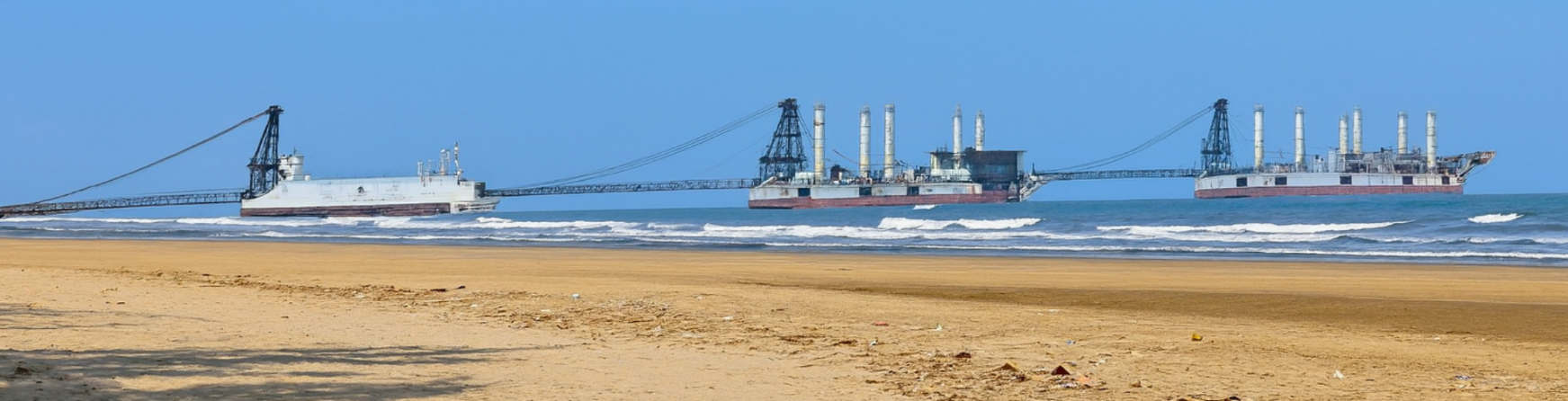
11 October 2025 China’s specialized amphibious assets are on the move,
The barges moving out to sea signals a possible escalation in military readiness. Three Shiuqiao-class landing barges—unique vessels designed to deploy as mobile piers enabling the rapid offloading of heavy equipment, vehicles, and troops onto unimproved beaches—have departed from Yuhuan on China’s eastern coast. Their movement suggests participation in upcoming People’s Liberation Army Navy (PLAN) amphibious exercises, possibly linked to the ongoing major drills in the South China Sea and Taiwan Strait. The Shiuqiao class plays a crucial logistical role in any large-scale landing or blockade operation, effectively bridging the gap between China’s transport fleet and shore operations. Their deployment is a clear indicator of the PLA rehearsing complex invasion logistics, likely aimed at refining capabilities essential for a potential Taiwan invasion.
10 October 2025- new export controls on rare earth elements
In a move that echoes the US oil embargo on Japan in 1941 China announced new export controls on rare earth elements and related technologies on October 9, citing national security concerns. The expanded restrictions—covering mining, processing, and magnet-manufacturing know-how—will require export licences and may deny access to defense and semiconductor users abroad. The move, seen as a form of economic coercion, tightens Beijing’s grip on a critical global supply chain essential for EVs, wind turbines, and advanced weapons. It is expected to drive price spikes, production delays, and intensified Western efforts to diversify supply, while giving China greater leverage in trade and technology negotiations ahead of upcoming U.S.–China talks.
10 October 2025-Taiwan’s National Day,
Officially known as Double Ten Day (雙十節 / Shuangshi Jie), and it stands as one of the most important dates in the Republic of China (ROC) calendar. The day commemorates the Wuchang Uprising of October 10, 1911, which triggered the revolution that overthrew the Qing Dynasty and led to the founding of the Republic of China — the government that later relocated to Taiwan in 1949 following the Chinese Civil War.
In modern Taiwan, Double Ten Day is celebrated with military parades, flag-raising ceremonies, fireworks, and a presidential address, symbolizing the island’s democratic identity and national pride. Politically, it serves as a powerful assertion of Taiwan’s sovereignty and self-governance, an act that Beijing consistently rejects as separatist. Each year, the People’s Republic of China typically responds with heightened military activity or warnings, viewing the holiday as a provocation.
Thus, October 10 is not just a historical commemoration but also is a geopolitical flashpoint, highlighting the sharp contrast between Taiwan’s democratic values and Beijing’s authoritarian ambitions — and reaffirming Taiwan’s determination to maintain its freedom and international identity.
9 October, 2025 –PLAN carrier exercises off Taiwan
From October 10–20, the PLA will conduct major military exercises in the South China Sea, with entry strictly forbidden. The drills are expected to feature both the Shandong and the Fujian aircraft carriers, signaling China’s intent to demonstrate dual-carrier operations. While framed as routine, the scale and location of the exercise carry strategic messaging: it highlights China’s growing naval power, warns off U.S. and allied activity in contested waters, and indirectly pressures Taiwan. For Taipei, the danger lies not in immediate invasion, but in the PLA normalizing large-scale deployments close to Taiwan and rehearsing capabilities—such as carrier air wings, blockade tactics, and integrated strike operations—that could be employed in a future crisis. Note also teh amphibious fleets now based neraby in the Yangtze River Estuary.
High-resolution satellite imagery taken on October 6 depicts a large assemblage of Chinese amphibious assault vessels moored in the Yangtze River Estuary—suggesting elevated operational readiness within the People’s Liberation Army Navy (PLAN). Analysts identified a Type 071 landing platform dock (LPD) and a Type 075 landing helicopter dock (LHD), both key assets in any potential cross-Taiwan Strait invasion. The presence of a Type 076 Yulan-class assault ship—equipped with electromagnetic catapults and possibly undergoing sea trials—signals progressive enhancements in carrier-like capabilities.
Additional imagery shows three “Shuiqiao” amphibious transport barges docked at Yuhuan Naval Base. These modular barges feature deployable road ramps enabling armored vehicles to disembark directly onto coastal roads—bypassing beach defenses. While these platforms remain limited in number and would require robust air and naval escort to be effective, their deployment underscores China’s focus on refining mechanized amphibious techniques.
3 October, 2025 — China’s Dongfeng-17 missile deployments a looming threat for Taiwan:
China’s People’s Liberation Army Rocket Force (PLARF) is reportedly preparing to deploy the DF-17 hypersonic ballistic missile at its Brigade 616 base in Jiangxi Province, approximately 579 kilometers from Taiwan. This development, noted by experts, suggests a strategic shift in China’s missile capabilities, potentially enhancing its ability to target U.S. airbases and naval assets in the Western Pacific, as well as presenting new challenges to Taiwan’s defense posture.
Defense analysts, including Derrek Eveleth from the Center for Naval Analyses, indicate that the DF-17’s deployment could signify a move to bolster China’s anti-access/area denial (A2/AD) capabilities. The missile’s speed and maneuverability may complicate interception efforts (making interception all but impossible once the HGV is released), posing a significant threat to regional security dynamics. Taiwan’s military strategists are closely monitoring these developments, considering adjustments to their defense strategies to counteract the evolving missile threat.
2030, the Arrival of Pax Sinica, & Consciousness or Catastrophe
Dear Arkite,
Watch my latest interview on the Geopolitics & Empire podcast titled: 2030, the Arrival of Pax Sinica, & Consciousness or Catastrophe!
David Murrin discusses the global "entropic cycle" and continuing deterioration of the world situation, anchored in a new hegemonic war cycle predicted to peak around 2030. The core geopolitical struggle between the West and the "axis of autocracies" is led by Pax Sinica whose day in the sun is arriving. He touches on the economy, gold, bitcoin, and more. We are moving toward consciousness or catastrophe.
Fat Fingers!

To our observant readers, you may have noticed that the last Akite Alert titled a Dangerous Fall Ahead sent in error, was rather more detailed than usual. The reason is that it contained the perspective of our CIO, which forms the core of our Global Trader: Your External CIO product which is specifically designed for professional investors only.
For those of you subscribed to Murrinations at Bronze, Silver, Gold, or Platinum levels, please note that this content was not intended for your eyes and as such should not be interpreted as investment advice.
However, if you are a professional investor and would like to learn more about accessing this incredibly alpha generatng product, then please reach out directly and .Engage David
Avoiding the Violent Opposition of Mediocre Minds

In a letter to Morris Raphael Cohen, Albert Einstein supported Bertrand Russell’s candidacy as a teacher, c. 1940.
"Great spirits have always encountered violent opposition from mediocre minds. The mediocre mind is incapable of understanding the man who refuses to bow blindly to conventional prejudices and chooses instead to express his opinions courageously and honestly."
Einstein’s observation captures an eternal truth:
whenever someone dares to think differently, they inevitably provoke hostility from those who cling to convention. The mediocre mind cannot comprehend originality because new ideas expose the limits of its own imagination. Instead of engaging with reason or evidence, they retreat into prejudice and resentment.
It takes real courage to stand apart,
Because mediocre minds rarely act alone. They draw strength from numbers, forming cliques and factions that create the illusion of authority. Their opposition rarely comes in the form of a fair argument; more often, it takes the shape of smear, distortion, and mob-like hostility. Their goal is to exhaust, isolate, and silence those whose independence threatens their comfort.
History shows that truth-tellers are resisted not because they are wrong, but because their vision is too threatening for the complacent to bear. To withstand such attacks, one must cultivate resilience, clarity, and the courage to walk alone if necessary. Violent opposition is not a sign of failure, but a confirmation that one has touched the nerve of truth.
This pattern is timeless:
-
Socrates, known for his questioning mind, challenged Athenian values and urged citizens to care more for virtue and wisdom than wealth or power. Accused of impiety and corrupting the youth, he was condemned by a jury and executed by drinking hemlock.
-
Galileo, condemned for his astronomy, was forced under threat of torture to recant his support for heliocentrism and spent the rest of his life under house arrest.
-
Giordano Bruno, the Italian philosopher who taught of an infinite universe filled with countless worlds, refused to deny his ideas. Tried for heresy by the Inquisition, he was burned at the stake in 1600.
-
Hypatia of Alexandria, a brilliant mathematician and philosopher, was murdered by a mob in 415 CE for her scholarship and influence during times of religious turmoil.
-
Alan Turing, the mathematician who helped break the Enigma code in World War II, was persecuted by his own government for his homosexuality. Convicted of “gross indecency” and chemically castrated, he died in 1954, only decades later receiving recognition as a national hero.
-
Einstein himself faced scepticism and dismissal when he first introduced relativity. His theories challenged Newtonian orthodoxy and were ignored or ridiculed until experimental proof in 1919 confirmed his predictions, transforming him from an outsider into one of history’s most celebrated scientists.
Today
Genuine independent voices are increasingly rare, as conformity and dogma tighten their grip. Those who still refuse to bow to political, scientific, or cultural orthodoxy are more valuable than ever.









 © David Murrin 2026. All images courtesy of Getty Images. |