

World War III, China's ascension, why David Murrin thinks the West is already checkmated and why Churchill was left-handed.
An increasing number of people think World War III is coming. However, David Murrin thinks they’re about four years too late.
It's just a rumour that was spread around town
Somebody said that someone got filled in
For saying that, people get killed in
The result of this shipbuilding. Elvis Costello
The geopolitical forecaster who predicted the 2008 financial crisis, Brexit, and Trump's election joins me this week with a thesis that should make you uncomfortable: America's empire is dying on schedule, China's ascension is mathematically inevitable, and your political leaders are systematically selected for their inability to see it coming.
David does not hold back!
The Maths of Empire
Murrin didn't pull these ideas from thin air. He's spent decades mapping what he calls the Five Stages of Empire, a cycle as predictable as tides, and about as stoppable. Think of it as geopolitical science: Regionalisation, Ascension, Maturity, Overextension, and finally, the awkward dinner party conversation where nobody mentions that Grandpa Empire is clearly losing his marbles.
According to Murrin's models, America is firmly in Stage Five. China is in Stage Two. You do the math(s).
Iran's $50 Drone vs America's $2 Million Interceptor
Here's where it gets interesting. While Western strategists argue about whether we're in a new Cold War, Iran is quietly bleeding America dry in what Murrin calls The Bear Trap. Every $50 Iranian drone forces the US to fire a $2 million interceptor. Not so much asymmetric warfare as asymmetric accounting.
The genius is that China doesn't have to fight. She just has to wait for Iran to bankrupt America’s missile defences, then stroll into the Pacific when it’s out of ammo. It's like letting your opponent exhaust themselves shadowboxing before you step into the ring.
Why Smart People Can't Run Countries (And Why That Might Be the Point)
Do you wonder why, amidst all this, we, the West, seem to be run by armies of idiots? This is perhaps Murrin's most provocative insight: Western democracies systematically promote linear thinkers to positions of power, then act surprised when they can't handle nonlinear problems. The same bureaucratic mindset that maintains stability in peacetime becomes suicidal when the rules change.
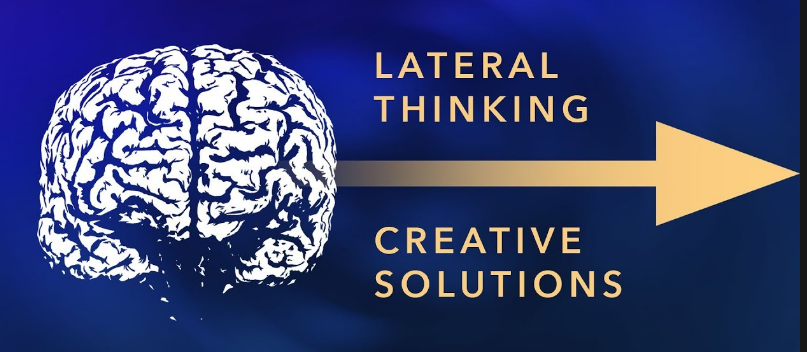
History suggests that dyslexic, lateral thinkers, the ones who see patterns others miss, are precisely who you want when your empire faces existential crises. But they're also the ones least likely to navigate a committee meeting, let alone get elected.
The Coming Commodity Supercycle
While Western central banks print their way to prosperity, Murrin's Kondratiev wave analysis suggests we're heading into the mother of all commodity cycles between now and 2030. Food, energy, and raw materials are about to become very expensive, as debt-fueled financial assets implode.
Translation: Your portfolio's geographic diversification might matter less than its periodic table diversification. (Never investment advice, DYOR).
The Singularity Arms Race
And then there's the AI wildcard. Murrin sees the technological singularity not as Silicon Valley’s fever dream, but as an inevitable consequence of military competition. When hypersonic weapons can reach any target in 15 minutes, and drone swarms can overwhelm traditional defences, the first-mover advantage becomes winner-take-all.
The question isn't whether artificial intelligence will change warfare. It's whether humans will still be making the important decisions when the shooting stops.
What This Means for You
Murrin's thesis is deeply uncomfortable because it suggests individual preparation matters less than understanding which empire you're betting on. If he's right about the mathematical certainty of these cycles, then the question isn't how to stop them, it's how to position yourself for what comes next.
This conversation was recorded on March 18th, 2026, before recent developments, but Murrin’s framework for understanding them remains depressingly relevant. When empires transition, they don't send advance warning. They just transition. It’s nothing if not thought-provoking analysis. Sometimes the most important predictions are the ones you hope are wrong.










 © David Murrin 2026. All images courtesy of Getty Images. |