Arkite Alerts Archive

Welcome to the archive of Arkite Alerts, Global Forecaster's free newsletter notifying subscribers of the latest news, podcasts, interviews, Global Trader performance reviews and more.

Arkite: the name derived from my Arkent Strategy to navigate, survive and thrive through the great shift.

Is the West Sleepwalking Into WWIII?

Dear Arkite,

Listen to my latest interview on the Longview podcast: Longview Conversations with David Murrin: Is the West Sleepwalking Into WWIII?

Image
longview podcast


In this fifteenth instalment of Longview Conversations With, CEO Chris Watling speaks with David Murrin — geopolitical strategist, market forecaster, and founder of Global Forecaster — in a wide-ranging discussion on war patterns and geopolitical tensions. Murrin, originally a geophysicist in Papua New Guinea, developed an early interest in collective human behaviour that shaped his work across markets and conflict. After JP Morgan and co-founding Emergent Asset Management, he launched Global Forecaster, advising governments, militaries, and financial institutions.

His 2009 book Breaking the Code of History outlines his Five Stages of Empire and 108–112 year hegemonic war cycle theory, frameworks behind his non-consensus forecasts. The conversation explores this war cycle and today’s position within it, alongside his fractal, quantum-inspired view of market behaviour during conflict. Murrin argues tensions around Iran and the Strait of Hormuz may persist longer than markets expect, supporting elevated oil prices. He also highlights Western strategic weakness and declining defence capacity, while pointing to China’s steady build-up as it positions itself as the next hegemonic power. We hope you enjoy it.

Listen Now

A full-blown World War III involving China now appears increasingly inevitable.

Image
bombs

Based on our analysis outlined in

  1. Iran's War on Israel and America 24:The Battle for the Gulf and Strait of Hormuz -Part I Iran's A2/D2 Strategy
  2. Iran's War on Israel and America 26:The Battle for the Gulf and Strait of Hormuz -Part II The USN Counter A2/AD Strategy
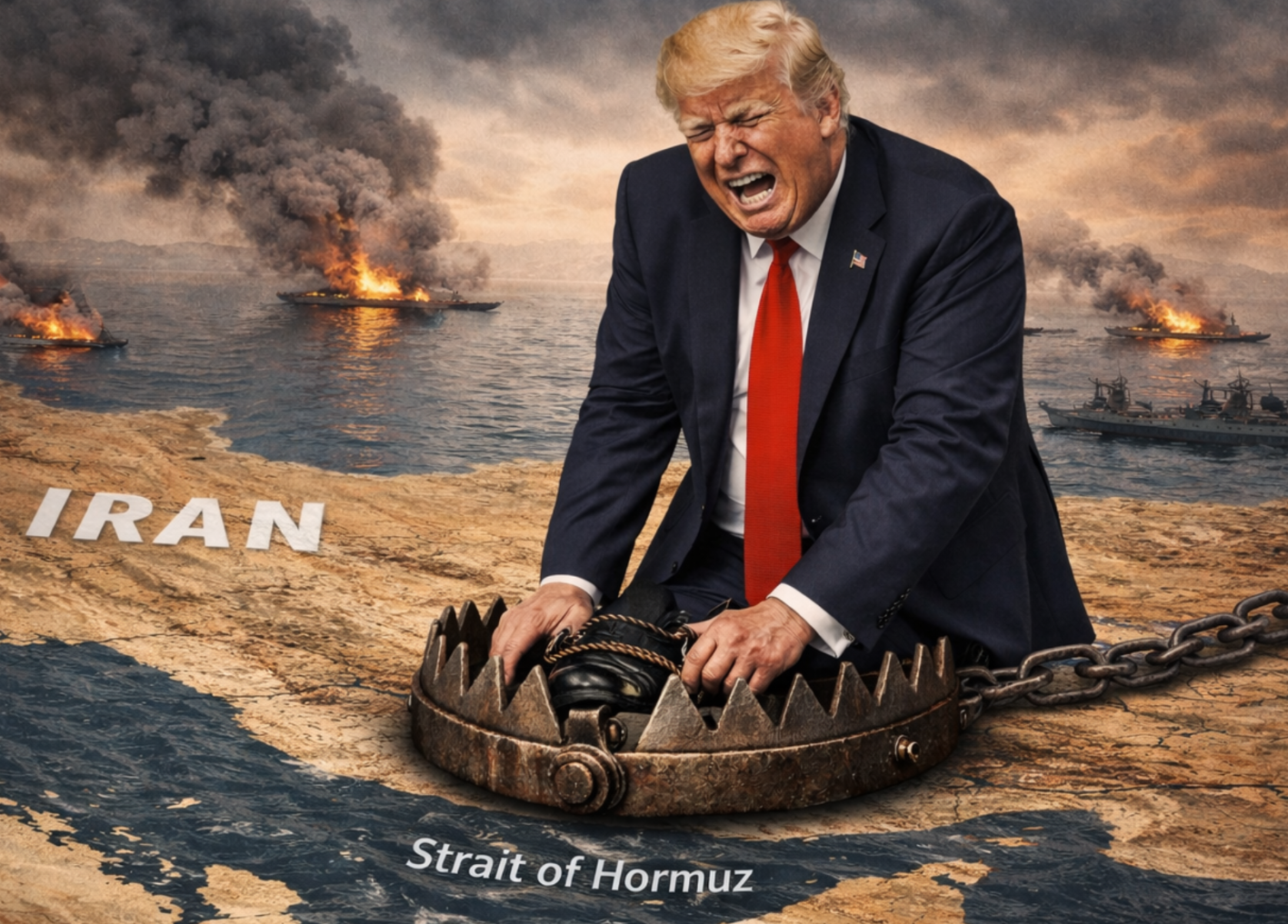
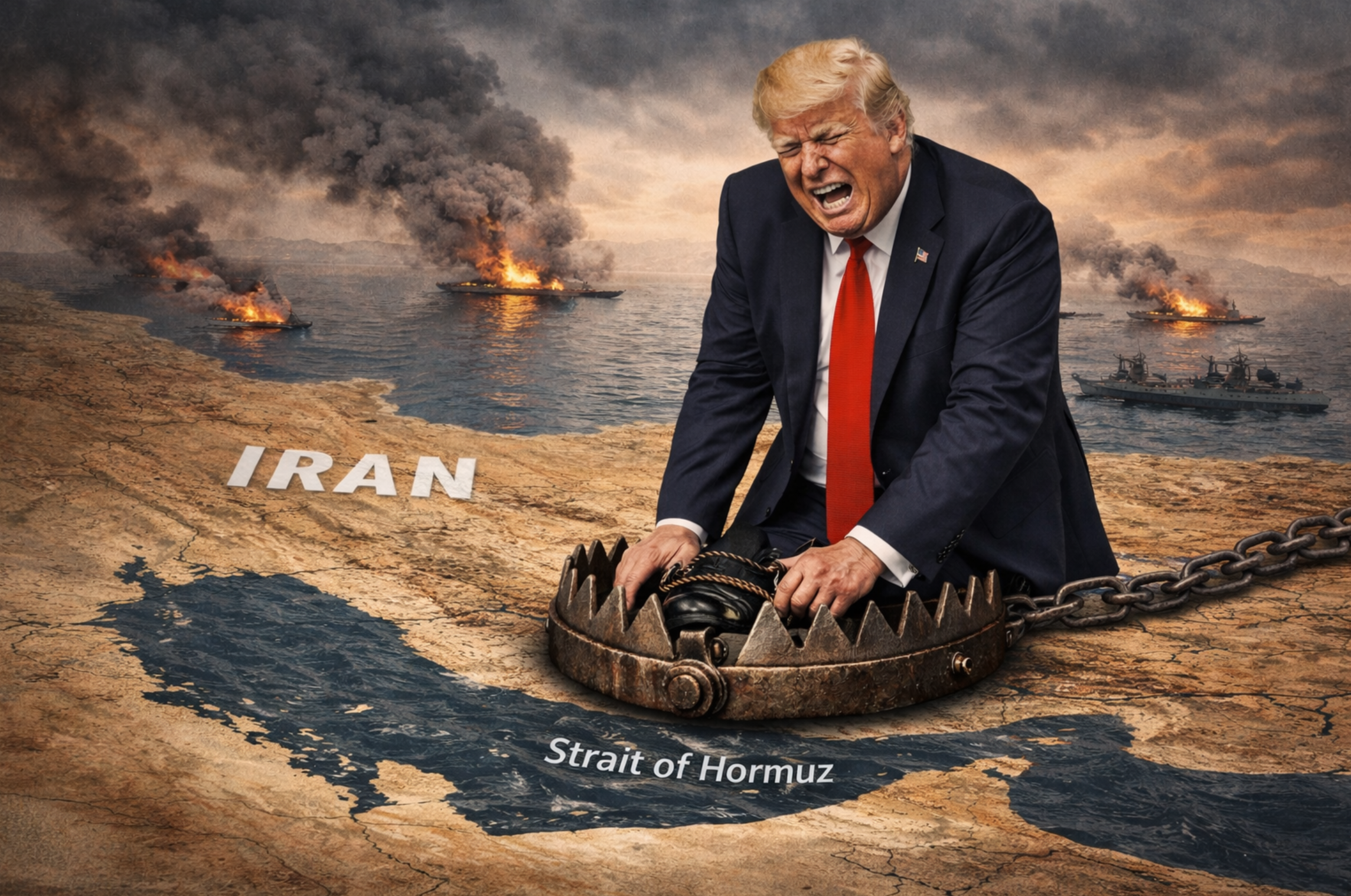
  3. Iran's War on Israel and America 25:Trump is Caught In An Iranian Bear Trap

Even if the United States saturates the campaign for control of the Gulf and Strait of Hormuz with the full range of sensors and combat assets outlined in this Murrination insight report, the operation to secure the Strait of Hormuz could be completed within three to four months. However, we anticipate that the United States may struggle to deploy and sustain such a high operational tempo, potentially extending the conflict well beyond that timeframe.

In addition, well before that point, there is a high probability that the depletion of American mid-course interceptors, the concentration of US naval and missile defence assets in the Gulf at the cost of Pacific and Atlantic deployments, and the disruption of oil flows as production facilities are damaged during missile/bomb exchanges will generate significant strategic compression. This will, in high probability, provide China with an opportunity to launch a major military campaign across the Pacific without warning to seize control out to the third island chain, potentially in parallel with a Russian escalation against NATO.” A view outline in-

WW3 107: Iran’s War with Israel 23: The Big Picture Escalatory Path to China Declaring War


So find out more -  Trump is Caught In An Iranian Bear Trap, and the implications for you, and  get ahead of the pack - 

Subscribe now to  Murrinations Gold

When Rising Powers Run Out of Room: Strategic Compression and the Outbreak of Great-Power Wars

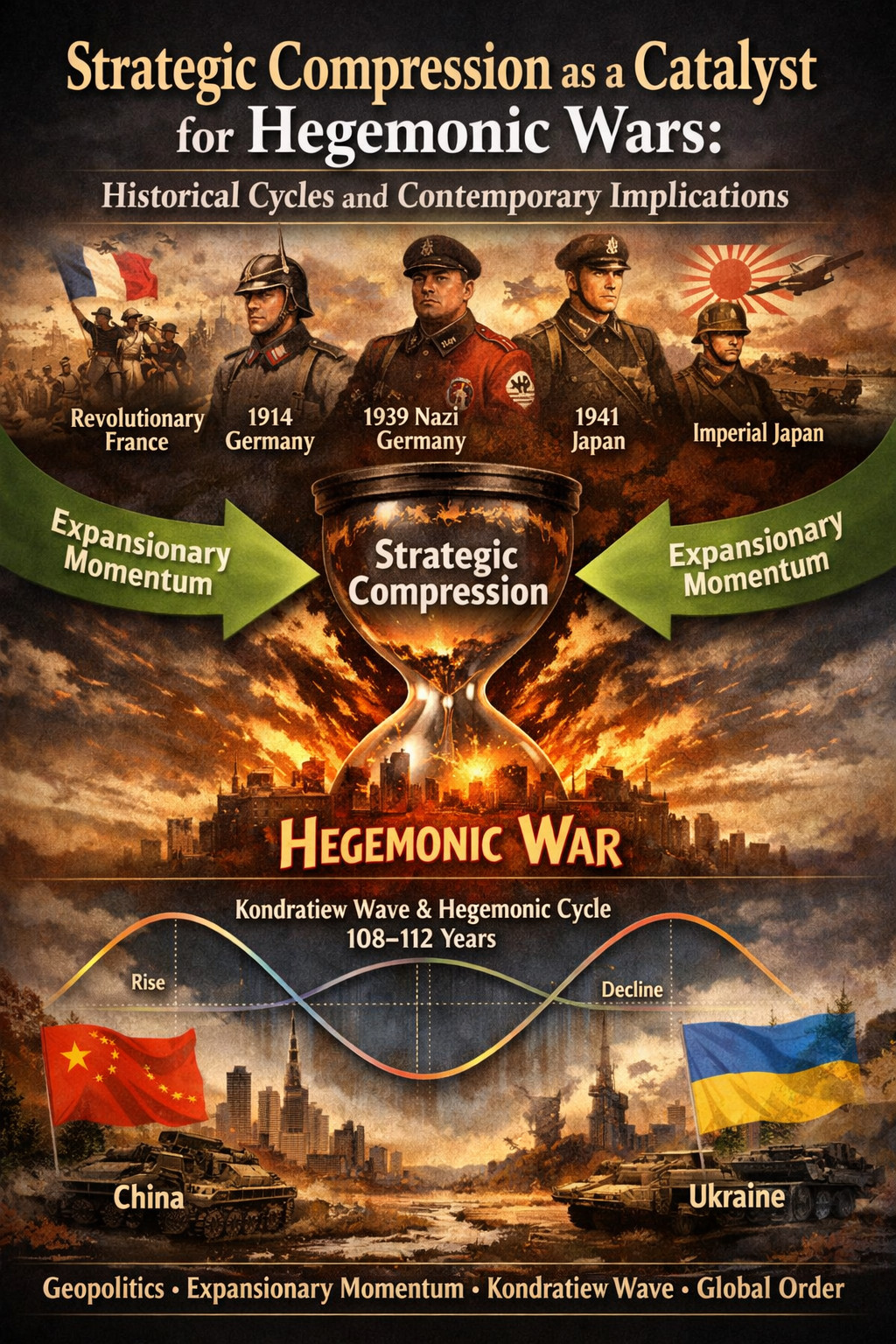
Strategic Compression as a Catalyst for Hegemonic Wars: Historical Cycles and Contemporary Implications

Why do rising powers so often launch wars they cannot win? This article argues that a recurring structural phenomenon, strategic compression, plays a central role. As states expand through population growth, economic strength, and internal unity, they inevitably meet resistance from the powers already dominating the system. That resistance narrows their options, creating pressure to act aggressively before conditions deteriorate further, even when the timing is poor.

The pattern repeats across centuries. Revolutionary France, Imperial Germany in 1914, Nazi Germany in 1939, and Japan in 1941 all followed strikingly similar trajectories — expansion meeting containment, followed by high-risk gambles born of perceived necessity.

The article places these dynamics within longer economic and geopolitical rhythms, drawing on Kondratiev Wave theory and the roughly 108–112-year cycle of hegemonic conflict. It then turns to the present, examining how compression shapes China's strategic calculus and Ukraine's regional position. The concluding section offers policy recommendations for Ukraine and Eastern Europe, focusing on resilience, anticipation, and collective approaches to managing systemic pressure.

Download Article

Image
Strategic Compression as a Catalyst for Hegemonic Wars

Find out more

The War With Iran Will Not Be Short

Image
bear trap
Image
bear

Einstein famously observed that doing the same thing over and over again while expecting a different result is the definition of stupidity and insanity; a warning that seems relevant to recent U.S. war operations in the region against Iran. The failed “mowing the grass” approach (aka Ruble bouncing as I have come to call it), previously seen in repeated strikes against Houthis' targets that cost hundreds of millions of dollars yet left the Houthis still operational, clearly illustrates the problem.

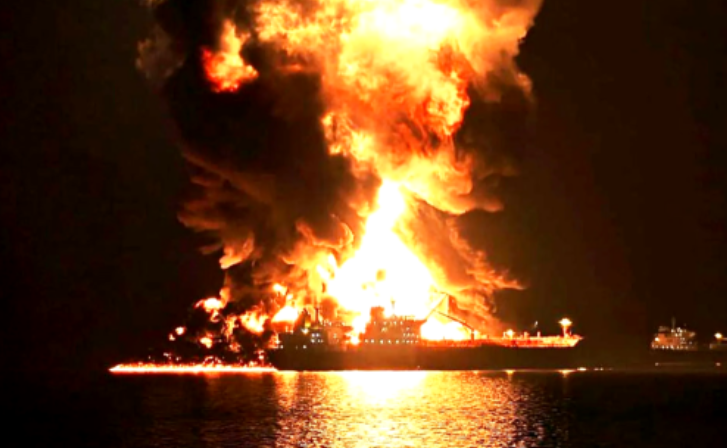
Rather than learning from these profound military lessons, Washington appears to have repeated the same strategy in confronting Iran on a larger, high-tempo scale. The Houthis themselves drew lessons from the IRGC’s doctrine of asymmetric warfare, and Tehran is now demonstrating a similar mastery in the Gulf; hidden long-range missiles to keep attacking Israel, to keep doing damage, whilst reducing US mid-course interceptor magazine depth with huge strategic consequences for imminent WW3 escalations in the Pacific. But best of all, it has emulated and expanded on the Houthis' success of denying the Red Sea to shipping, while using mines, drones, missiles and unmanned fast attack boats to challenge far more expensive U.S. naval assets and disrupt shipping across the gulf through the Strait of Hormuz. For the IRGC, this is like shooting fish in a barrel, and we should expect many more ships to be hit in the days ahead.

The result is a classic case of a technologically superior American force struggling against a well-prepared adversary using asymmetric tactics to impose disproportionate costs. This strategic paradigm is America's nemesis; as time erodes national willpower, leading to defeat on every occasion since and including Vietnam. In the case of Trump today, he is, by our assessment, less able to withstand the atrophy of time than any other US president caught in war. Indeed, on Monday this week (war day 8), he announced it was all over and on Wednesday, he was bawling out his four main advisors for feeding him misinformation that led us to war.........

Now, find out more about why Trump is Caught In An Iranian Bear Trap and the implications for you.

Get ahead of events - Subscribe now  Murrinations Gold

Why Trump Is Trapped in Iran's War of Attrition

Find Out Why Trump Has His Foot In An Iranian Bear Trap

How Trumpy Came To Have A Big Tantrum

Image
war

A Parable of War

And then, just after Trumpy proudly declared victory on Monday, the Iranians quietly started laying mines in the Strait of Hormuz.

This, unsurprisingly, made Trumpy rather angry.

So he ordered his navy to go and remove them.

The navy duly dispatched its three-remaining mine-clearing ships to deal with the problem. Unfortunately, by Thursday, two had been blown up by mini-submarines and the third was taken out by a small cruise missile.

Now completely bereft of minesweepers, the C-in-C of the Navy received a spectacular rant from Trumpy, who had just discovered—somewhat late in the day—that the U.S. military is not, in fact, the world champion when it comes to mine-sweeping.

Meanwhile, in the next few weeks, oil shot up to $200 a barrel.

The Chinese, finding themselves rather short of oil and knowing that the US has run out of mid-course interceptors, decided this might be a good moment to start a war.

And everyone was apparently very surprised, except those who follow Global Forecaster!


Be the Solution-Not the Problem

Subscribe now and find out. Murrinations Gold


Strategic Compression as a Catalyst for Hegemonic Wars

Strategic Compression as a Catalyst for Hegemonic Wars: Historical Cycles and Contemporary Implications

Image
Strategic Compression as a Catalyst for Hegemonic Wars

This article explores strategic compression as a structural catalyst for hegemonic wars. Expansionary momentum – driven by demographic growth, economic vitality, and national cohesion – inevitably collides with systemic resistance from established powers. The resulting compression narrows strategic options, fostering premature aggression at suboptimal moments. Historical case studies, including Revolutionary
France, Germany in 1914, Nazi Germany in 1939, and Japan in 1941, illustrate this recurring pattern.

The analysis situates compression within Kondratiev Waves and the 108–112-year hegemonic war cycle, highlighting their predictive value. Contemporary application highlights China’s strategic environment and Ukraine’s regional experience, demonstrating the universality of compression dynamics. The article concludes with policy recommendations for Ukraine and Eastern Europe, emphasising resilience,
foresight, and cooperative strategies to mitigate systemic pressures.

Download Article

Podcast Alert: The Regional Iranian War

Dear Arkite,

Listen to my latest The State Of It podcast, covering The Regional Iranian War:

Image
the state of it

David and Horatio discuss the escalation in the regional Iranian war. Going into depth about where and when this began and how this conflict may look in the coming months and years. 

We also go over the other current conflicts in the globe right now, Pakistan and Afghanistan and Russia and Ukraine. Mentioning the complex dynamics that are involved in these very different but interlinked situations. 

Stay ahead of the curve.

Listen Now

Share with family, friends and colleagues.

Petition to His Majesty’s Government: Establish a National Defence Reinvestment Programme

Image
lion


Global Foercaster calls upon His Majesty’s Government and Parliament to take urgent action to restore the United Kingdom’s defence preparedness in the face of an increasingly dangerous global security environment.

Recent conflicts in Ukraine and the Middle East have demonstrated that modern warfare is defined by high-intensity missile exchanges, drone warfare, and rapid industrial mobilisation. These conflicts highlight the growing gap between the scale of modern military threats and the United Kingdom’s current defence capacity, stockpiles, and industrial readiness.

We have outlined the situation and history to this point in our Murrination series

The United Kingdom’s Armed Forces and defence industrial base have been shaped by decades of the post–Cold War “peace dividend” and strategic stupidity. As a result, Britain now faces a strategic environment characterised by great-power competition, missile proliferation, and persistent hybrid threats, while possessing limited stockpiles, constrained production capacity, and delayed procurement timelines.

We therefore call on His Majesty’s Government to adopt a National Defence Reinvestment Programme built on the following principles:

  1. Immediate Strategic Investment
    Commit to an initial capital investment equivalent to 5% of GDP to rapidly rebuild Britain’s defence industrial capacity, stockpiles, and critical infrastructure for homeland defence.
  2. Sustained Annual Defence Investment
    Following this initial investment, maintain annual defence spending at 5% of GDP to ensure that Britain possesses the forces, industrial base, and technological edge required to deter and defeat modern threats.
  3. Rebuilding National Resilience
    Prioritise investment in air and missile defence, munitions production, advanced technologies, cyber security, and the protection of critical national infrastructure.
  4. Strengthening the Defence Industrial Base
    Support British industry in scaling production capacity so that the United Kingdom can sustain prolonged high-intensity conflict if required, while also contributing more effectively to NATO and allied defence.
  5. Ensuring Credible Deterrence
    Guarantee that Britain remains capable of defending its homeland, supporting its allies, and upholding the rules-based international order.

The first duty of any government is the protection of the realm and its citizens. We therefore urge His Majesty’s Government to act with urgency and strategic clarity to restore Britain’s defence strength and national resilience.

We ask the Government to commit to this programme and present a clear timetable for implementation.

Sign this petition